
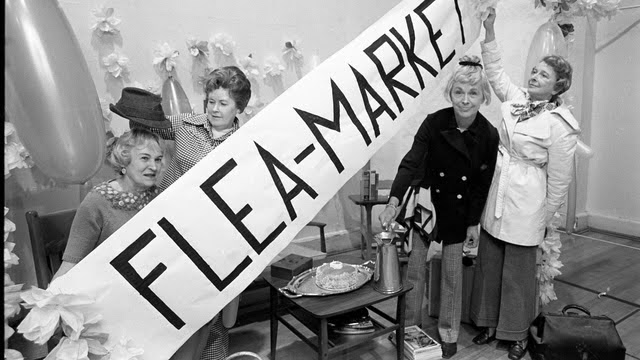
Founded in 1900, the League is one of the oldest organizations on campus. Since its inception, the League has focused on supporting students: fundraising to help pay for buildings, furnishing student residences, facilitating library acquisitions, starting scholarships and more. The League is perhaps best known for its annual Fieldhouse Flea Market, which it has sponsored since 1968, and allows the community to come together and showcase local artistry alongside traditional antiques and Women’s League booths. Since 1982, all funds have gone toward The Women’s League Scholarship, which provides five awards to students with financial need, awarding more than $1 million in need-based scholarships to nearly 500 students. Members include alumni, current and retired members, friends and neighbors and mothers of current students and alumni. This year, the league is celebrating its 125th anniversary. In addition to celebrating their track record of accomplishments, they are also making some changes.
Before the change, their bylaws in Article III stated: “Membership in the University of Puget Sound Women’s League shall be open to all persons who identify as women who support the objective of the organization.” It now reads: “Membership in the University of Puget Sound Women’s League shall be open to all persons who support the objective of the organization.” Carol Colleran, co-president of the Women’s League, spoke about changing the wording in their bylaws to make their membership more inclusive. “Men have been welcomed to attend our meetings and be involved as they were able, but it did take the Federal Government pointing out to the University that we had discriminatory wording in our bylaws to be able to welcome men,” she said. She says the League was happy to make the change, given that it would invite more members to contribute to their goal of supporting students. Colleran is a Puget Sound alumna and her mother was very involved in the Women’s League. She became “hooked” on both the mission of supporting student scholarships and the friendly and interesting people who are members. Her involvement consists of volunteering at the Flea Market and being on the diversity and nominating committee.
The first male member is Vice President for University Relations Victor Martin. “To me, this is less about being a ‘first’ and more about the welcoming and impactful nature of the League itself,” he said. Martin was prompted to join after working closely with the League to promote their events and major fundraisers. Before joining, he had established a collaborative relationship with the League’s presidents, Colleran and Mickey Pierce, by working with his team to support their goals and steward their endowed funds. “It was an easy decision to show my support,” he said when he heard they were looking to expand membership. “I look forward to attending meetings when I am able, volunteering on projects and participating in their programming — all in support of Puget Sound and our students.”
Recently, there have been instances of communities experiencing pressure to change their language about who their organization includes. This can be seen in the Trump Administration’s “Dear Colleague” letter, which suggests university affinity groups (particularly race-based ones) are illegal. While that letter is on hold, some universities are taking preemptive action by renaming or removing organizations. Although the University’s precautionary measures to protect students are important, some have raised concerns about inclusivity in spaces historically reserved for one group. Professor of Politics and Government Dr. Alisa Kessel said, “I think there are good reasons why a group might want to preserve an ‘affinity’ space, and there are good reasons to be inclusive; it just depends on the needs of the group and what kind of space the members want to create.” Kessel says that determining when an organization should be inclusive is a complex process. “One of the challenges about community is to decide who should be a part of it and who shouldn’t. Communities, especially those that make decisions, can’t always include every single person, and they usually have some kind of boundary between who’s in and who’s out. This is a kind of exclusion, but not always a bad kind of exclusion,” she says. Kessel adds, “A lot depends on the goals of the group and the context in which the group is formed.” Kessel notes it’s important for the future of these organizations supporting marginalized communities to “not succumb to ‘anticipatory obedience,’ or ‘obeying in advance.’” Kessel acknowledged, “This commitment is especially true for the more privileged among us, who cannot and should not rely on marginalized communities to stand at the front of resistance, though they often do.” She expressed hope that affinity groups will continue to focus on upholding their values, while those outside of those communities will actively support those groups’ rights to organize.
Anna Dery, a member of the Women’s League, joined to aid in the League’s mission of support and to connect with women in the community. When she initially heard they were now welcoming non-female members in the monthly newsletter, she was a bit surprised. “For me, a big reason for joining was not just to make diverse friends, but also to have a specific group of women, and maybe it wasn’t going to be that anymore.” Although Dery is wary of the policy that the league had to adhere to, she does fully support the Women’s League’s efforts to support students. “I’m appreciative of the really supportive non-women members of this campus community, and this is not an attack on the people that want to come into the women’s league that aren’t women, but we should question the institutions that exist and why these changes are happening.” She emphasized the importance of recognizing why these protected spaces for women have historically existed and their need for them today. Dery brings up the point of recognition that women were excluded from higher education institutions for a long time. “These women-specific spaces were originally created not to exclude men, but because men, and the institutions run by men, excluded women. It is a way for women to have power, autonomy and community in higher ed. So what does it mean when policy is forcing changes to the makeup of these spaces? What does that mean for the conversation of power between institutions and designated spaces for affinity groups?”
Vice President for Institutional Equity and Diversity Dr. Lorna Hernandez Jarvis offered her thoughts on the expanding membership in the Women’s League. “It shows their ability to adapt to the times. To change.” Hernandez Jarvis highlighted that a variety of voices and perspectives, especially when focused on a common goal, is helpful because it allows us to question our own thinking and grow more. She pointed out that with this inclusivity, “You don’t have to worry about, when we say women are talking about biological sex, or are we talking about women who identify as women, or people who identify as women? So with this way of opening it up, you don’t have to be concerned about that.” When asked whether the change to include male members might have been a capitulation to the Trump administration’s threats to affinity spaces, Jarvis expressed sincere doubt. However, she did state that “The University is trying to be careful not to be targeted” and “that the administration is trying to protect the mission, the vision and the existence of the University.” She explained, “We really are trying to think about what we can do to allow students to be students and teachers to do their research and to teach and connect with their students the way they need to.”