
By ADRIANA TJADER and RORY SMITH
Recent polling and electoral developments suggest that Democrats may have opportunities to gain congressional seats in competitive states, including Michigan and North Carolina. They may also gain representation in traditionally Republican stronghold states, such as Texas, where the president has been campaigning despite him typically not needing to campaign in deep red states. Declining approval ratings for President Trump, alongside economic concerns surrounding the war with Iran, may influence voter preferences ahead of midterms.
Among the closely watched contests is Michigan’s Senate race between Democrat Abdul El-Sayed, a progressive candidate campaigning on healthcare reform and economic affordability, and Republican Mike Rogers, who narrowly lost his 2024 Senate bid to Democrat Elissa Slotkin. Electoral successes by candidates affiliated with the Democratic Socialists of America have also attracted attention ahead of November. The successes of the Democratic Socialists of America represent young people’s desire for radical change in the face of rising living costs and a depressing political environment. They pose a major threat to more establishment-aligned candidates who aren’t willing to go against their corporate donors and make the necessary policy changes that would benefit the average person.
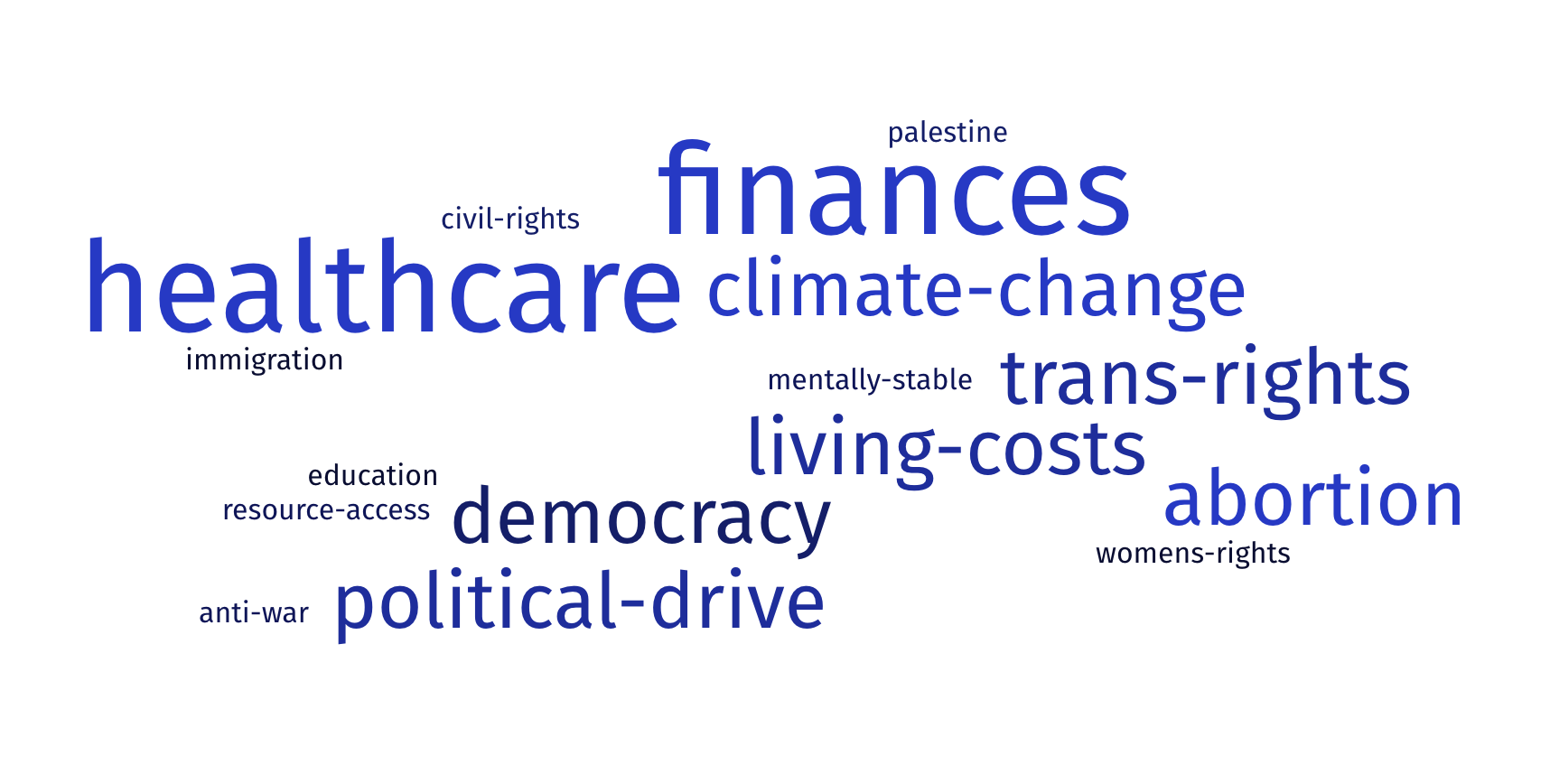
As midterms approach, The Trail gathered student perspectives on the upcoming midterms and asked about issues influencing their voting decisions. Students who responded listed healthcare, the cost of living, democracy and civil rights among their leading concerns. Several expressed a desire for elected officials who would prioritize constituents’ interests, address rising costs of living and protect the rights of minority groups.
Sullivan Taylor (’28) expressed particular interest in how public perceptions of Trump’s presidency could influence the election results.
“I believe the results of the midterm elections could seriously impact the rest of Trump’s term,” Taylor said. “With Trump’s approval rates falling after the start of the Iranian war, I am eager to see how this sways voters when choosing their congressional representatives.”
Other students expressed frustration with the political response to the Trump administration. Teddy Murphy (’30) criticized what he described as “the Democrats’ consistent failures to do anything productive to protest the actions of the current US government.”
Despite these concerns, many respondents reported previous electoral participation, with 85.7% indicating that they had voted in past elections.
The Trail also spoke with Olivia Kent-Horton (‘27), who works with Puget Sound’s Civic Engagement team to promote voter registration on campus. Under the University’s Student Civic Engagement initiative, the team provides resources to help students register to vote and navigate the voting process.
“I think that we in the office, especially myself being a student, the goal is less exactly to mobilize students, as I think that takes more time and advocacy behind the cause,” Kent-Horton said. “But we try to take the approach of making it easier for people to get registered, remind them to vote and request their absentee ballots, and give them real-world examples of the importance of both national and midterm elections.”
Kent-Horton emphasized that making voting resources accessible is central to the team’s mission. Beyond providing information, they hope to create opportunities for students to ask questions and connect with peers who have previously navigated the voter registration process.
“Treat it like accessibility, not just education,” Kent-Horton said. “The strongest thing you can do as a person in my specific position of service is to just be accessible, whether it be for questions. It’s why we have to table a lot so that people can see someone behind the emails.”
Kent-Horton also stressed that the team’s commitment to civic engagement extends beyond the upcoming elections. Although the initiative promotes nonpartisan participation, she hopes students will increasingly recognize civic engagement as a larger ongoing responsibility. From what Kent-Horton has seen so far, this has been largely successful. “This is the second higher education institution that I have done voter registration at. I did it as an advocacy chair at Cascadia College,” she says. She goes on to say, “I have heard students in both of my institutions say, ‘Will my vote even matter?’ I am proud of UPS because I hear that less.”
“We want to build into students’ minds the idea that civic participation can be self-advocacy and an art, and difficult but also quick and easy,” Kent-Horton said. “Civic engagement is part of our lives.”
The upcoming midterms could determine federal policies on issues directly affecting Puget Sound students, including economic affordability, healthcare concerns and civil rights. As students consider their involvement in elections, Puget Sound’s Civic Engagement Team continues working to make voter registration and electoral participation more accessible. By encouraging these political conversations, they hope to provide students with the necessary resources to make informed decisions on issues impacting their communities and future generations.